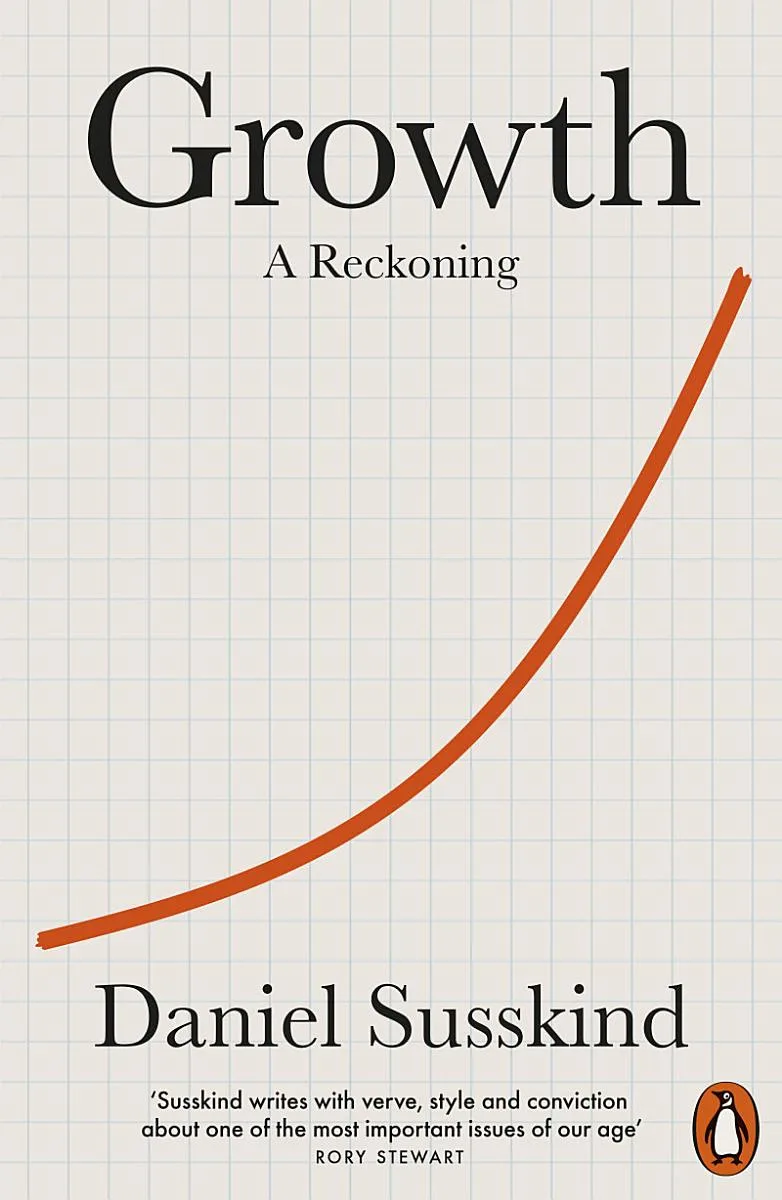
Daniel Susskind examines the historical obsession with Gross Domestic Product and the modern dilemma of sustaining economic expansion without destroying the planet. He traces the shift from centuries of stagnation to the rapid rise of the industrial age, identifying how human ingenuity and technological progress became the primary engines of wealth. The text specifically analyzes the tension between the "growth command" and the physical limits of the environment, alongside the disruptive impact of artificial intelligence on labor markets. Susskind proposes a framework for reconciling the need for material progress with the necessity of social stability and ecological preservation.
This book is written for policymakers, economists, and business leaders navigating the transition toward a post-industrial landscape. Readers learn how to distinguish between quantitative expansion and qualitative improvement within an economy. The text provides a clear understanding of how automation alters the social contract and offers specific strategies for rethinking prosperity in an era of climate change. Those interested in the intersection of technology and public policy will find a blueprint for balancing technical innovation with human welfare.
Insights from Growth
“Growth is the defining feature of the modern age.”
Economic growth used to be a miracle that saved us from poverty. Now it feels like a dilemma because it might destroy the planet.
“Ideas are non-rival.”
Ideas are different from physical goods because everyone can use them at once. One person's discovery makes everyone else wealthier without taking anything away.
We often talk about the environment and the economy as separate fights. They are actually the same struggle over how we use our limited resources.
Most history was just people surviving on the same amount of food for centuries. The sudden explosion of wealth in the last two hundred years is a total anomaly.
- Published
- 2024
- Publisher
- Random House
- ISBN
- 9780141998725
- Language
- EN