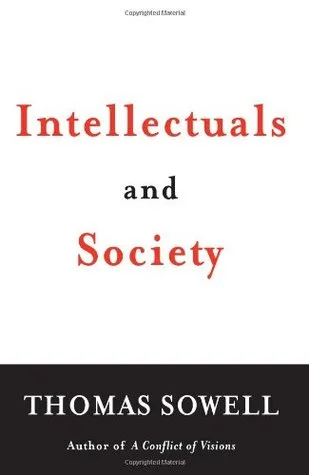
Thomas Sowell examines the influence of "idea-merchants"—academics, journalists, and writers—on modern public policy and social movements. He argues that these intellectuals operate within a "vision of the anointed," promoting abstract theories and social engineering without facing personal accountability for the real-world consequences of their failures. The book categorizes different types of knowledge, contrasting the concentrated expertise of the specialist with the dispersed, practical knowledge of the general population. Sowell details how this disconnect leads to disastrous outcomes in areas like criminal justice, economics, and foreign diplomacy when intellectuals prioritize internal ideological consistency over empirical evidence.
This work targets readers interested in political theory, sociology, and the mechanics of public discourse. Those who question why certain academic theories persist despite contrary evidence will find a systematic framework for understanding how institutional incentives protect flawed ideas. The reader walks away with a clear vocabulary to describe the gap between bureaucratic planning and voluntary social cooperation. It provides a historical lens through which to view the rise of a professional class that shapes public opinion by claiming a monopoly on wisdom and morality.
- Published
- 2009
- Language
- EN
More by Thomas Sowell
See all →



Readers also enjoyed