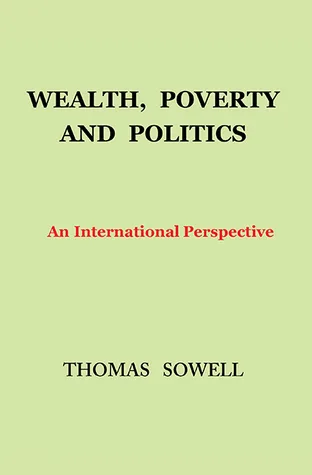
Thomas Sowell analyzes the logical and empirical inconsistencies within contemporary social justice movements. He examines specific fallacies, including the assumption that unequal outcomes between groups serve as proof of systemic discrimination. Sowell presents data on demographic differences, such as median age disparities and geographical variations, to explain how these factors naturally produce divergent economic results. The text scrutinizes the "chess pieces" fallacy, where intellectuals treat individuals as passive objects for social engineering, and critiques the historical failure of redistributive policies based on social visions rather than measurable facts.
Economists, policy analysts, and readers interested in conservative social theory read this book to understand the disconnect between political theory and practical statistics. The audience seeks a data-driven rebuttal to popular equity-based arguments. Readers walk away with a framework for evaluating social disparities through the lens of human capital and cultural history rather than structural oppression alone. It provides the intellectual tools to question modern narratives regarding wealth distribution and institutional bias using historical evidence.
- Published
- 2023
- Language
- EN