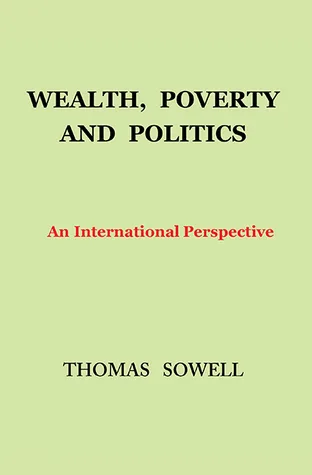
Wealth, Poverty and Politics: An International Perspective
Thomas Sowell analyzes the causes of economic inequality across nations and ethnic groups by examining four primary factors: geography, culture, social patterns, and political decisions. He argues against the premise that material wealth should be naturally equal in the absence of exploitation. Instead, he demonstrates how navigable waterways, isolation, and literacy rates influence productivity. Sowell uses historical data to show how cultural capital, such as specific technical skills or work habits, moves across borders through migration and determines the financial success of minority populations regardless of their host environment.
This book serves researchers, economists, and students of public policy who want to understand why specific regions lag behind others. Readers gain a framework for evaluating government interventions and redistributive policies against historical outcomes. The text provides a pragmatic look at human capital and geographic luck, leaving the reader with a data-driven perspective on why global prosperity is concentrated in particular pockets. It is used by those seeking to separate cultural and environmental influences from political rhetoric regarding wealth distribution.
- Published
- 2015
- Language
- EN