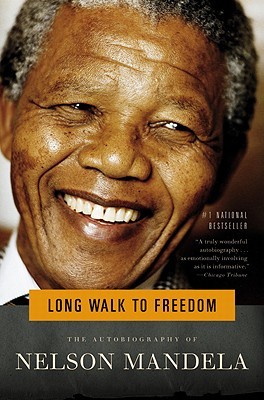
Nelson Mandela details his progression from a childhood in the rural Eastern Cape to his career as a lawyer and activist in Johannesburg against the National Party’s apartheid system. He outlines the development of the African National Congress’s resistance, moving from non-violent protest to the formation of the Umkhonto we Sizwe paramilitary wing. The narrative follows his 1962 arrest, the Rivonia Trial, and his subsequent twenty-seven years of imprisonment on Robben Island, where he negotiated with government officials before his 1990 release and 1994 inauguration.
Students of political history and advocates for civil rights read this account to understand the strategic mechanics of dismantling institutionalized segregation. The text provides a technical look at how a liberation movement organizes under state repression and maintains internal discipline during decades of isolation. Readers walk away with a factual record of the legal battles, prison conditions, and diplomatic maneuvers that transitioned South Africa from a white-minority regime to a multiracial democracy.
Contemplative; a moderate read.
Best for readers like The Escapist Adventurer. Which reader are you?
Insights from Long Walk to Freedom
“I am not a saint, unless you think of a saint as a sinner who keeps on trying.”
Mandela spent years in prison but refused to hate his guards. He saw their humanity even when they tried to strip away his. It makes me wonder if I could ever be that patient.
Living in a tiny cell for decades changed how he saw time. He focused on the smallest victories like a single vegetable growing in the yard. It shows how much we overlook in our busy lives.
“To be free is not merely to cast off one's chains, but to live in a way that respects and enhances the freedom of others.”
He realized that being free isn't just about breaking your own chains. You have to live in a way that respects the freedom of others too. That shift in perspective is everything.
“Education is the most powerful weapon which you can use to change the world.”
Education was his greatest weapon against the old regime. Even in prison, the men turned their cells into an informal university. They never stopped learning from each other.
- Published
- 1994
- Publisher
- Hachette UK
- ISBN
- 9780759521049
- Language
- EN
Quotes by Nelson Mandela
More →It always seems impossible until it's done.
I learned that courage was not the absence of fear, but the triumph over it.
Long Walk to Freedom
Education is the most powerful weapon which you can use to change the world.