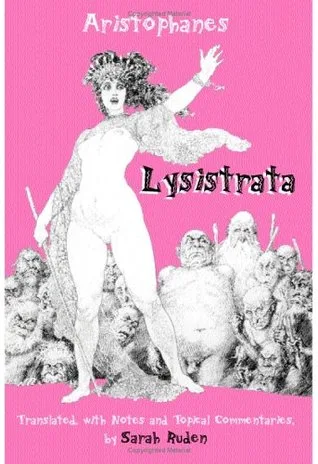
In this Greek comedy, the title character Lysistrata organizes a Panhellenic meeting of women to force an end to the Peloponnesian War. She convinces her peers from Athens, Sparta, and Corinth to initiate a total sex strike, refusing intimacy until their husbands sign a peace treaty. While the men suffer physical distress from the ban, an auxiliary group of older women seizes the Athenian Acropolis to block the war treasury. The play follows the resulting negotiations and the breakdown of traditional domestic and political hierarchies.
Readers interested in the origins of political satire or early feminist literary archetypes read this play to examine how humor functions as social commentary. The text demonstrates a specific historical intersection of gender roles and anti-war sentiment in 411 BCE. Readers finish the play with an understanding of Old Comedy’s reliance on bawdy scenarios to critique military policy. It serves as a study of how collective non-cooperation can disrupt state power and military institutionalism through the domestic sphere.
Outward-looking; a moderate read.
Best for readers like The Curious Generalist. Which reader are you?
- Language
- EN