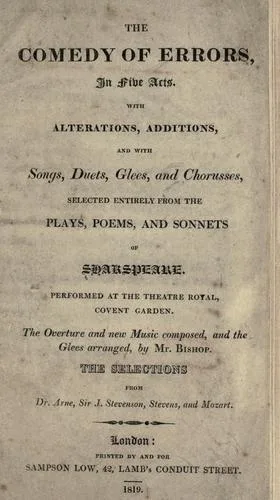
The play follows two sets of identical twins, both named Antipholus and Dromio, who were separated during a shipwreck in infancy. When Antipholus of Syracuse and his servant Dromio arrive in Ephesus, they are unaware that their long-lost brothers live there. The plot centers on a series of mistaken identities involving the local townspeople, a suspicious wife named Adriana, and a puzzled goldsmith. Characters frequently mistake the visiting twins for the residents, leading to wrongful arrests, accusations of madness, stolen jewelry, and domestic chaos. The logic of the narrative relies on the physical resemblance of the siblings and the increasingly frantic attempts of the characters to explain the contradictory behavior of those around them.
Younger readers and students of drama read this work to understand the mechanics of farce and situational irony. It provides a clear example of how timing and perspective drive a comedic narrative. The audience learns how a single misunderstanding can escalate into social disorder when information is withheld from the participants. Readers walk away with a grasp of classical plot structure, the importance of stage directions, and the way wordplay functions within theatrical dialogue. It serves as a foundational text for those interested in the history of slapstick and the evolution of comedic tropes in Western literature.
Outward-looking; a moderate read.
Best for readers like The Curious Generalist. Which reader are you?
- Published
- 1734
- Language
- EN
Quotes by William Shakespeare
More →There is nothing either good or bad, but thinking makes it so.
Hamlet
What's past is prologue.
The Tempest
The fault, dear Brutus, is not in our stars, but in ourselves.
Julius Caesar