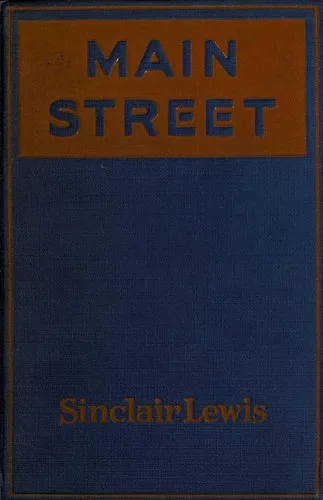
Carol Kennicott moves from the city to Gopher Prairie, Minnesota, seeking to introduce aesthetic beauty and intellectual vibrancy to the provincial town. She encounters a rigid social hierarchy dominated by the "Jolly Seventeen" and a middle class obsessed with commerce, gossip, and outward appearances. The narrative details her struggle against the stifling conformity of the village, where her attempts to improve the library and local architecture are met with suspicion. Through satire, the book dissects the economic stagnation and cultural isolation inherent in small-town American life during the early twentieth century.
This book serves students of American history and observers of social dynamics who want to understand the tension between individualism and community expectations. Readers observe how social pressure enforces mediocrity and inhibits civic progress. The text provides a lens for analyzing the psychology of the collective and the financial reality of rural commerce. By the end, a reader understands the mechanisms of social gatekeeping and the difficulty of implementing institutional change within a closed, self-satisfied society.
- Published
- 1634
- Language
- EN
![The United States in Literature [with three long stories] -- Seventh Edition](https://kwbjoqloympvbpzbrfja.supabase.co/storage/v1/object/public/scan-images/catalog/f48162c6-7eb5-41ec-933b-9c4218489c7d-full.webp)