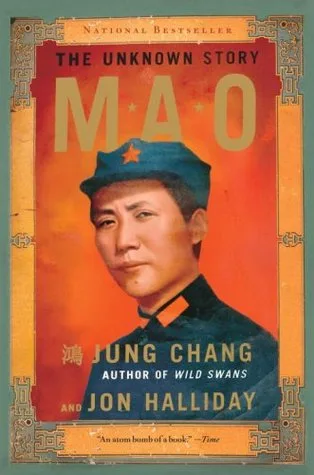
Jung Chang and Jon Halliday argue that Mao Zedong was a tyrant driven by a desire for global dominance rather than communist ideology. Drawing on Soviet archives and interviews with Mao’s inner circle, the biography claims Mao intentionally engineered famines, such as during the Great Leap Forward, to export grain in exchange for nuclear technology. The narrative depicts the Long March as a series of tactical retreats facilitated by Chiang Kai-shek’s hidden motives and describes Mao as a leader who maintained control through systematic terror and the psychological manipulation of his subordinates.
Students of twentieth-century history and political science read this work to understand the mechanics of total dictatorial control. It appeals to readers who want a counter-narrative to official party histories of the Chinese Revolution. A reader walks away with a detailed timeline of Mao’s political maneuvers and a cynical perspective on the founding of the People’s Republic. The book provides a framework for analyzing how individual ambition can dictate the trajectory of a massive geopolitical entity.
- Published
- 2002
- Language
- EN