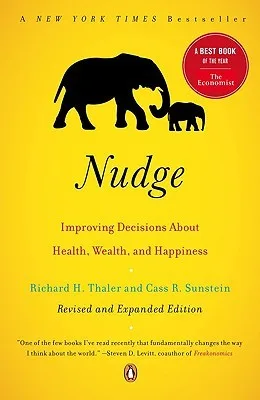
Nudge: Improving Decisions About Health, Wealth, and Happiness
In Nudge, Richard Thaler and Cass Sunstein explain how choice architecture—the way options are presented to us—dictates our daily decisions. The authors argue that humans are prone to cognitive biases and often choose the path of least resistance rather than their own best interest. They introduce libertarian paternalism, a framework where institutions use small interventions to guide people toward better outcomes without restricting their freedom. Key examples include setting retirement savings plans to automatic enrollment, placing fruit at eye level in cafeterias, and using default options to increase organ donation rates.
This book is for policymakers, business managers, and individuals interested in behavioral economics. It provides a toolkit for structuring environments to reduce human error and improve long-term financial and physical health. Readers walk away with an understanding of how to use defaults, feedback loops, and incentives to influence behavior. By learning how these subtle cues function, readers gain the ability to recognize when they are being nudged and learn how to design systems that facilitate better choices for themselves and others.
Clear-cut; a moderate read.
Best for readers like The Evidence Seeker. Which reader are you?
- Published
- 2008
- Language
- EN
More by Richard H. Thaler
See all →

Books like Nudge: Improving Decisions About Health, Wealth, and Happiness
See all 12 →