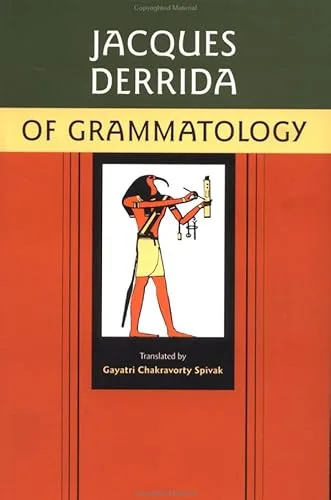
Jacques Derrida challenges the traditional subordination of writing to speech within Western philosophy. He argues that the history of metaphysics relies on logocentrism, a bias that treats spoken words as direct expressions of presence and thought while dismissing written signs as secondary, corrupt supplements. Through a close reading of Jean-Jacques Rousseau and Ferdinand de Saussure, Derrida introduces deconstruction to dismantle this hierarchy. He proposes the concept of arche-writing and the term différance, suggesting that meaning is never fully present but is instead constantly deferred through a network of linguistic traces.
This text serves scholars of literary theory, linguistics, and continental philosophy who seek to analyze how language structures human knowledge. Readers gain a technical framework for identifying internal contradictions in formal arguments and destabilizing binary oppositions like nature versus culture. The book provides the foundational tools for deconstructive criticism, allowing a researcher to demonstrate how the stability of any written text eventually undermines itself.
- Published
- 1967
- Language
- EN