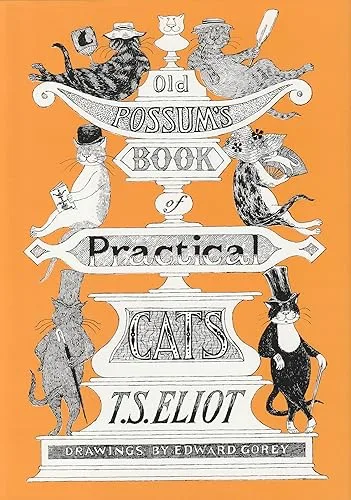
T. S. Eliot presents a collection of light verse focused on the distinct personalities and secret lives of feline neighbors. These poems introduce a diverse cast of characters, including the mischievous Mungojerrie and Rumpleteazer, the flamboyant Rum Tum Tugger, and the criminal mastermind Macavity. The text details specific feline behaviors, such as the strategic naming of cats, the territorial rituals of the Gumbie Cat, and the theatrical prowess of Gus the Theatre Cat. Eliot uses varied rhythmic structures and whimsical terminology to describe the social hierarchies and eccentric habits that define the domestic cat.
Readers interested in formal poetry and feline behavior turn to this collection for its playful use of language and meter. The book appeals to those who enjoy seeing everyday animals characterized through sophisticated wit and specific rhythmic patterns. A reader concludes the book with a vocabulary of memorable character archetypes and a whimsical framework for observing the cats in their own lives. It provides a technical example of light verse that balances strict poetic form with humor, making it a standard reference for the overlap of animal observation and traditional prosody.
Outward-looking and clear-cut; an easy read.
Best for readers like The Practical Optimizer. Which reader are you?
Insights from Old Possum's Book of Practical Cats
“His mind is engaged in a rapt contemplation.”
Every cat carries a secret identity that humans can never touch. They spend half their lives thinking about a name they won't ever tell us.
“He has lived many lives in succession.”
Old Deuteronomy has lived so long he belongs to the whole village. There is something lovely about a creature being respected just for surviving for so long.
“Macavity's not there!”
Macavity reminds me that some people are just chaos. They leave the room a mess and vanish before you even hear the door click.
“For he isn't the Cat that he used to be.”
Gus the Theatre Cat lives entirely in his glory days. It's a bit sad how he thinks modern plays aren't as good as the ones he was in.
- Published
- 1939
- Publisher
- Harcourt Brace & Company
- ISBN
- 9780151686568
- Language
- EN