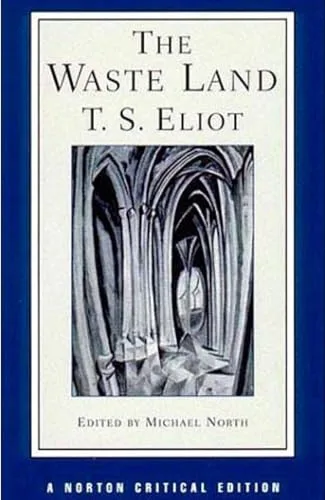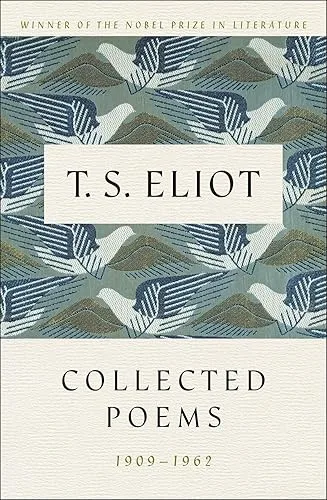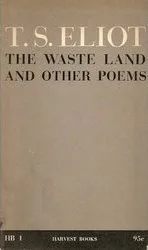
Published in the wake of the First World War, this collection centers on the psychological and cultural fragmentation of Western society. The title poem utilizes a polyphonic structure, weaving together Sanskrit mantras, Cockney dialogue, and Wagnerian opera to depict a world of emotional sterility and spiritual drought. Eliot employs the Grail legend and the Fisher King myth as a skeletal framework to contrast historical grandeur with the mundane squalor of modern London. Through sensory images of dry stone, stagnant water, and urban dust, the poems document a collapse of traditional order and the isolation of the individual consciousness.
This volume serves students of modernism and readers interested in the evolution of twentieth-century prosody. It attracts those seeking to understand how allusion and non-linear narrative can reconstruct meaning from social ruins. The reader gains a technical appreciation for how free verse and dense cross-referencing function to represent internal thought patterns. By finishing these works, an audience understands the transition from Victorian sentimentality to an era of irony, intellectual complexity, and stylistic austerity.
Deep and open-ended; a demanding read.
Best for readers like The Literary Connoisseur. Which reader are you?
- Published
- 1922
- Language
- EN