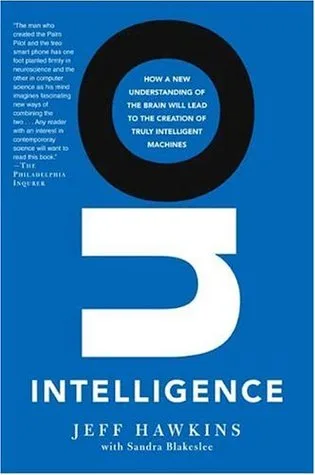
Jeff Hawkins argues that human intelligence stems from a single computational algorithm used by the neocortex to process sensory input. He presents the Memory-Prediction Framework, which suggests that the brain does not calculate solutions like a computer, but instead stores past experiences to predict future events. By constantly comparing incoming spatial and temporal patterns against these internal models, the biological brain anticipates changes in the environment. Hawkins details how the hierarchical structure of cortical columns facilitates this continuous feedback loop, distinguishing biological cognition from traditional artificial intelligence.
Engineers and cognitive scientists read this book to understand the structural differences between silicon-based logic and biological neural networks. It provides a theoretical blueprint for developing machines that can actually understand contexts rather than just processing data points. Readers walk away with a specific vocabulary for discussing cortical layers and a functional hypothesis for how physical matter generates thought. It serves as a bridge for those wanting to apply neurobiological principles to the practical design of autonomous systems and future software architectures.
- Published
- 2004
- Language
- EN