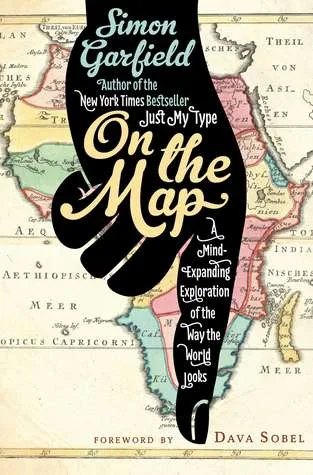
On the Map: A Mind-Expanding Exploration of the Way the World Looks
Simon Garfield traces the historical evolution of cartography from early clay tablets and the medieval Mappa Mundi to the digital rise of Google Maps. He details how specific creators, such as Claudius Ptolemy and Gerardus Mercator, established the visual frameworks that dictate how people perceive continents and borders. The narrative focuses on the technical challenges of projecting a sphere onto a flat surface and the deliberate choices mapmakers make to highlight certain empires while marginalizing others. Case studies include the hunt for mythical islands, the tracking of London’s cholera outbreaks, and the development of the London Underground map.
This book serves enthusiasts of navigation, history, and graphic design who want to understand how spatial layouts influence human perspective. Readers gain a technical appreciation for how data visualization shapes geographic knowledge. They learn to identify the biases inherent in physical and digital charts, walking away with a clearer understanding of why the world is represented in specific shapes and how those representations direct movement, commerce, and political power.
- Published
- 2012
- Language
- EN