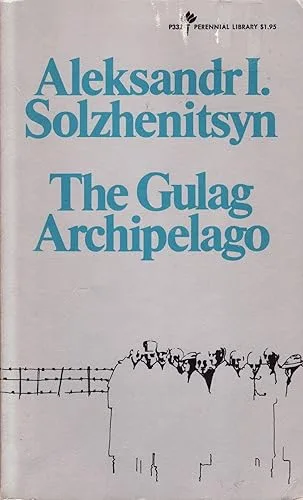
Set in a 1950s Soviet labor camp, the novel tracks Ivan Denisovich Shukhov through a single winter day of his ten-year sentence. The narrative details the physical mechanics of survival: hiding a piece of bread, enduring a freezing construction shift at the Power Station, and navigating the camp’s social hierarchy to secure extra rations. Shukhov focuses on immediate tasks, like laying bricks with precision or avoiding the disciplinary cell, rather than grand political defiance. Success is measured by avoiding illness and ending the day with a full stomach.
This book serves historians and readers interested in the internal dynamics of the Gulag system. It provides a technical look at how individuals preserve their dignity through manual labor and strict self-discipline under total state control. Readers walk away with a granular understanding of the logistical hardships faced by political prisoners and the specific methods of endurance required to outlast a repressive regime. It functions as a document of human resilience stripped of all abstraction.
- Published
- 1962
- Language
- EN