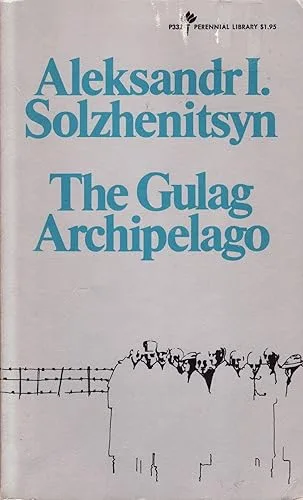
The Gulag Archipelago details the history and internal functioning of the Soviet forced labor camp system between 1918 and 1956. Drawing from his own eight-year imprisonment and the testimonies of over two hundred survivors, Aleksandr Solzhenitsyn documents the legal mechanisms used to arrest citizens under Article 58, the psychological methods of interrogation, and the logistics of prisoner transport. He describes the daily realities of starvation, cold, and exhaustive labor in the mines and forests of Siberia. The work argues that the camp system was a central pillar of the Soviet economy and state security rather than a peripheral excess.
Historians and political theorists read this text to understand the bureaucratic architecture of totalitarianism. Readers acquire a technical record of how ideological frameworks are used to classify social groups as enemies of the state. It provides a detailed look at the physical and moral endurance required to survive under extreme deprivation. The reader walks away with a concrete understanding of how mass incarceration can be integrated into a national infrastructure and the specific ways people retain their agency within a repressive system.
- Published
- 1973
- Language
- EN
More by Aleksandr Solzhenitsyn
See all →

Readers also enjoyed