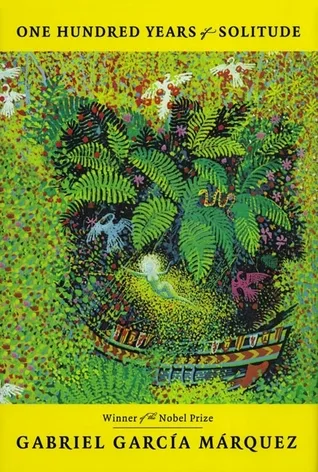
The narrative follows seven generations of the Buendía family within the isolated village of Macondo, beginning with the patriarch José Arcadio Buendía. After fleeing his home following a killing, he founds a settlement where the line between historical reality and the supernatural disappears. Characters endure civil wars, industrial shifts, and internal obsessions while experiencing events such as a four-year rainstorm, ghosts who refuse to leave, and a child born with a pig’s tail. These individual lives repeat the same names and mistakes, trapped in a recurring loop of human behavior and inevitable isolation.
Readers of epic family sagas and historical fiction value this work for its specific use of magical realism, where the miraculous is treated as mundane. It attracts those interested in the political history of Latin America and the philosophical concept of time as a circle rather than a line. A reader finishes the book with a perspective on how heritage and memory dictate the present, observing how the forgotten past eventually leads to the total disappearance of a lineage.
Insights from One Hundred Years of Solitude
“The history of the family was a machine with unavoidable repetitions.”
Pilar Ternera could see the future in a deck of cards. But knowing what comes next never actually saved anyone. They all marched straight into their fates anyway.
“It’s as if time had turned around and we were back at the beginning.”
Living through seven generations starts to feel like a circle. Characters keep naming their kids after themselves. They end up making the exact same mistakes over and over.
“He had to promote thirty-two wars and violate all his pacts with death to reach the privilege of simplicity.”
Colonel Aureliano Buendía fought thirty-two wars and lost every single one. He ended up just making little gold fishes in his workshop. It makes you wonder what truly matters in the end.
“She was the only one who still had enough lucidity to sense that time was not passing.”
Ursula is the only one who stays sane while the men chase ghosts. She watches them get obsessed with alchemy and war. She knows the house only stands because she keeps sweeping the floors.
- Published
- 1967
- Publisher
- Penguin UK
- ISBN
- 9780241968598
- Language
- EN