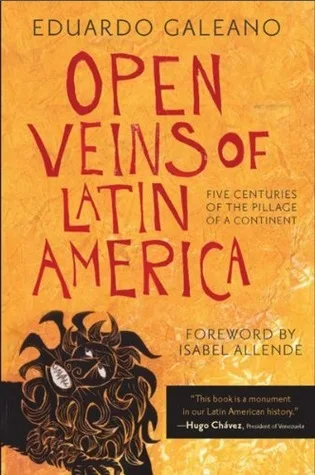
Open Veins of Latin America: Five Centuries of the Pillage of a Continent
Eduardo Galeano details how European and North American industrial growth relied upon the systematic extraction of Latin American natural resources. The text tracks the movement of wealth from the silver mines of Potosí and the gold fields of Brazil to the sugar, rubber, and coffee plantations of the Caribbean and Central America. Galeano argues that the region’s poverty is not a failure of development, but a direct result of international trade structures that convert local labor into foreign capital. He analyzes how local elites collaborated with imperial powers to maintain a plantation economy that prevented internal industrialization.
This book serves students of political economy and history who seek to understand the origins of global inequality. Readers analyze the historical mechanisms of dependency and learn how colonial patterns of exploitation survived the transition to modern corporate capitalism. Those interested in the relationship between raw material exports and national debt find a clear explanation of how the specialization of Latin American markets served external interests. The reader gains a framework for interpreting modern Latin American politics as a response to centuries of decapitalization and resource drainage.
Deep, outward-looking and clear-cut; a moderate read.
Best for readers like The Evidence Seeker. Which reader are you?
- Published
- 1971
- Language
- EN