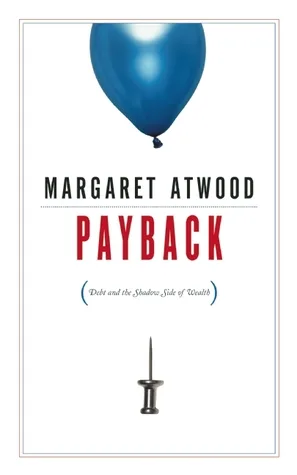
In this series of essays, Margaret Atwood interprets debt as a cultural construct rather than a purely financial mechanism. She examines the evolution of borrowing through the lens of ancient theology, biological reciprocity, and literary history, specifically referencing the moral accounting found in the work of Charles Dickens. The narrative details how human concepts of fairness and symmetry underpin our modern credit systems. Atwood connects the biological impulse for revenge to the legal definitions of bankruptcy and uses the debt-based imagery of Christopher Marlowe and William Shakespeare to show how societal obligations became commodified.
This book serves readers interested in the sociological origins of economic systems and the philosophical morality of lending. It attracts those who want to understand why humans view borrowing as a sin or a duty. The reader gains a perspective on the parallels between environmental degradation and unpaid financial balances, viewing the ecological crisis as a debt to nature that is coming due. They walk away with a historical framework for analyzing how individual and national identity is shaped by what people owe to each other.
- Published
- 2008
- Language
- EN