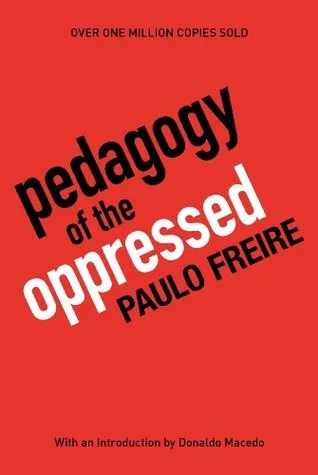
Paulo Freire argues that traditional education functions as a "banking system" where teachers deposit information into passive students to maintain societal control. He rejects this model in favor of problem-posing education, which uses dialogue to eliminate the hierarchy between teacher and student. The book outlines a framework for conscientization, or developing a critical awareness of social contradictions. Freire asserts that the oppressed must lead their own liberation by recognizing how they have internalized the values of their oppressors, ultimately aiming for a humanizing praxis that combines reflection with direct action.
This book is written for educators, community organizers, and social theorists interested in the intersection of literacy and political agency. Readers use these strategies to transition from rote memorization to analytical inquiry in classrooms and grassroots movements. A reader walks away with a practical vocabulary for identifying systemic domesticity and a blueprint for fostering democratic participation through collaborative learning. It provides a method for turning education into a tool for reclaiming autonomy within marginalized populations.
Deep; a moderate read.
Best for readers like The Deep Diver. Which reader are you?
- Published
- 1968
- Language
- EN