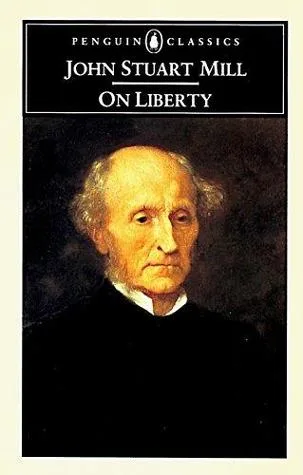
John Stuart Mill establishes the Harm Principle, asserting that the only justification for interfering with an individual's freedom is to prevent harm to others. This treatise argues against the tyranny of the majority and social pressure toward conformity. Mill defends absolute freedom of speech and expression, maintaining that even false opinions are valuable because they force the truth to be defended and clarified. He describes personal individuality as a vital component of human well-being, arguing that society benefits when citizens experiment with different modes of living.
Political theorists and students of ethics read this text to understand the boundaries between state authority and personal autonomy. Readers gain a framework for evaluating when a government or community oversteps its bounds through censorship or paternalistic laws. It provides a logical basis for defending civil liberties and minority viewpoints in democratic systems. By the end, the reader understands why intellectual diversity is necessary for social progress and how to identify the subtle ways public opinion can suppress individual character.
- Published
- 1859
- Language
- EN
Quotes by John Stuart Mill
More →Liberty consists in doing what one desires.
On Liberty
The tyranny of the majority is now generally included among the evils against which society requires to be on its guard.
On Liberty
More by John Stuart Mill
See all →

Readers also enjoyed