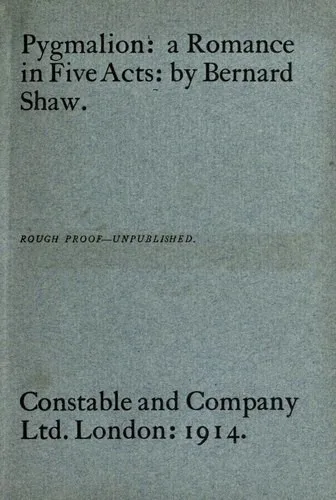
Professor Henry Higgins, a specialist in phonetics, bets that he can pass off a Cockney flower girl, Eliza Doolittle, as a duchess by altering her speech and manners. He subjects her to rigorous lessons in pronunciation and etiquette, viewing the project as a mechanical challenge. However, once Eliza successfully navigates a high-society garden party, she finds herself caught between two worlds. She can no longer return to her previous life on the street, yet she lacks the financial independence to belong to the upper class. The play focuses on the rigid British class structure and the realization that changing an accent does not grant someone a new social identity or human dignity.
Students of linguistics and sociology read this play to understand how dialect functions as a barrier to social mobility. It appeals to readers interested in how language shapes identity and the ethical responsibilities of those who manipulate others for intellectual sport. A reader walks away with a clear view of the disparity between outward refinement and inward character, recognizing that true class elevation involves more than mastering vowels and social graces.
Deep and thought-provoking; a moderate read.
Best for readers like The Deep Diver. Which reader are you?
- Published
- 1912
- Language
- EN