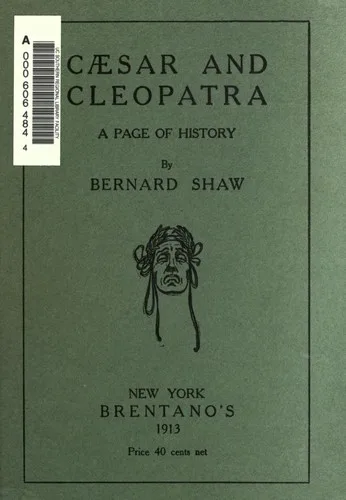
George Bernard Shaw’s play reinterprets the Roman occupation of Egypt through the mentor-student dynamic between an aging Julius Caesar and a teenage, impulsive Cleopatra. Unlike traditional romantic depictions, the narrative depicts Caesar as a pragmatic philosopher-general who disdains vengeance and political vanity. The plot follows his efforts to stabilize the Egyptian throne amidst palace intrigues, the Siege of Alexandria, and the rivalry between Cleopatra and her brother, Ptolemy XIII. Shaw emphasizes the clash between Caesar’s calculated statesmanship and the primitive, bloodthirsty instincts of the Egyptian court and his own subordinates.
History enthusiasts and drama students read this play to see a subversion of the tragic hero archetype. The text provides a character study of intellectual authority versus emotional volatility, stripping away the glamorous myths of the two protagonists. Readers walk away with a specific analysis of original morality—Caesar’s ability to act beyond public opinion or spite—and an understanding of how power is cultivated through discipline rather than inherited status. It serves as a study in political realism and the cold mechanics of empire building.
Balanced in tone; a moderate read.
Best for readers like The Story Seeker. Which reader are you?
- Published
- 1900
- Language
- EN