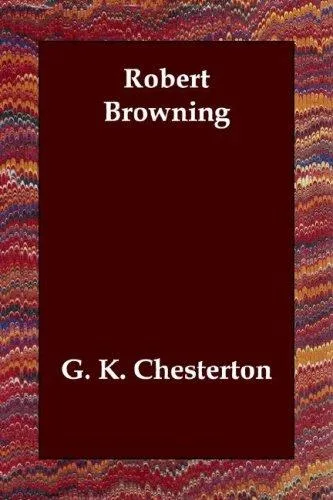
G.K. Chesterton examines Robert Browning’s life and artistic output by focusing on the poet’s internal optimism and his unconventional use of the dramatic monologue. The text traces Browning’s development from his early, misunderstood verses to his later recognition, specifically analyzing how he used the grotesque and the jagged rhythms of speech to capture psychological truth. Chesterton argues that Browning’s perceived obscurity was actually a form of intellectual shorthand. He details the famous elopement with Elizabeth Barrett and frames the poet’s work through the lens of a rugged, defiant spiritual health.
Students of Victorian literature and readers interested in literary biography use this book to understand the intersection of poetic form and personal philosophy. A reader acquires a specific framework for interpreting Browning’s difficult syntax and his focus on flawed characters. By engaging with Chesterton’s paradoxical style, the audience learns to differentiate between technical complexity and genuine linguistic invention. The book provides a historical perspective on how nineteenth-century dramatic poetry attempted to represent the spontaneity of human thought and emotion.
- Published
- 1903
- Language
- EN