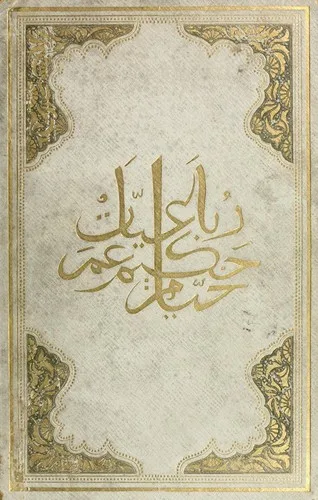
This 1870 edition presents a collection of quatrains attributed to the eleventh-century Persian mathematician Omar Khayyam, translated into English verse by Edward FitzGerald. The text argues for a philosophy of carpe diem, centering on the inevitability of death and the futility of seeking religious or scientific certainty. The speaker advocates for physical pleasure, specifically the consumption of wine and the company of loved ones, as a rational response to a deterministic universe. Through metaphors of pottery, moving shadows, and fading blossoms, the verses illustrate the brief nature of human existence.
This book serves readers interested in Victorian translations of Sufi poetry and skeptics looking for historical perspectives on agnosticism. It attracts those who value concise, rhythmic verse and philosophical inquiries into mortality. A reader finishes these poems with a framework for accepting life's transience without relying on traditional theology. The text provides a specific vocabulary for discussing the passage of time and the value of immediate sensory experience over abstract speculation.
Deep, inward-looking, contemplative and open-ended; a moderate read.
Best for readers like The Wisdom Collector. Which reader are you?
- Published
- 1870
- Language
- EN