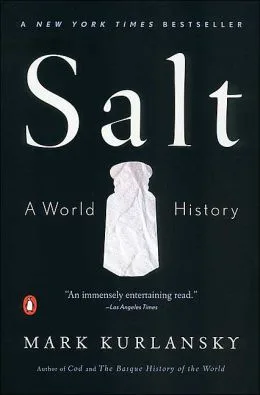
Mark Kurlansky traces the development of human civilization through the lens of sodium chloride, documenting how this common mineral shaped global trade routes, military strategies, and economic hierarchies. The narrative follows the transition from ancient brine pools in China and the Egyptian preservation of mummies to the rise of major salt hubs like Venice and the Hanseatic League. By detailing various extraction techniques—including solar evaporation, mining, and boiling—Kurlansky demonstrates how control over salt production enabled governments to fund wars and exert political influence through taxation.
This book serves readers interested in microhistory and the intersection of geology and sociology. It attracts those who want to understand the logistical underpinnings of pre-industrial society and the origins of specific culinary traditions, such as the curing of salt cod and the fermentation of soy sauce. Readers finish the book with a clear understanding of how a once-precious commodity became a cheap industrial staple, and how the pursuit of salt effectively mapped the modern world.
Outward-looking and clear-cut; a moderate read.
Best for readers like The Evidence Seeker. Which reader are you?
- Published
- 2002
- Language
- EN
More by Mark Kurlansky
See all →
Books like Salt: A World History
See all 12 →