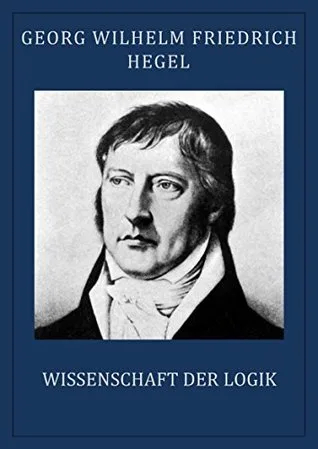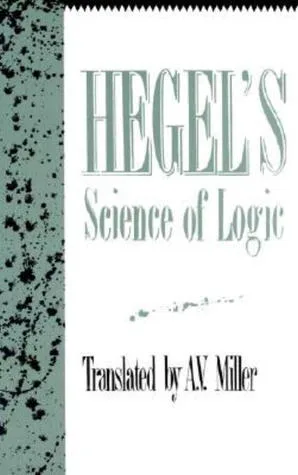
The Science of Logic presents a system of thought that moves from the concept of Pure Being to the Absolute Idea. Hegel argues that traditional logic is insufficient because it treats categories as static. Instead, he demonstrates how concepts naturally transition into their opposites, a movement he calls sublation. The text begins with the lack of determination in Being, which collapses into Nothing, resulting in Becoming. Through this dialectical method, Hegel examines the categories of quality, quantity, and essence, eventually arriving at the Notion, where subjectivity and objectivity reunite as a single organic whole.
This book is intended for students of metaphysics and continental philosophy who seek to understand the structural evolution of rational thought. Readers engage with this material to see how contradictions function as the driving force behind intellectual development. By following the rigorous proofs, a reader gains a framework for viewing reality as a historical process of self-knowledge. One walks away with a technical vocabulary for analyzing the internal tensions within any given concept and understanding the logical necessity behind complex social and mental structures.
- Published
- 1812
- Language
- EN