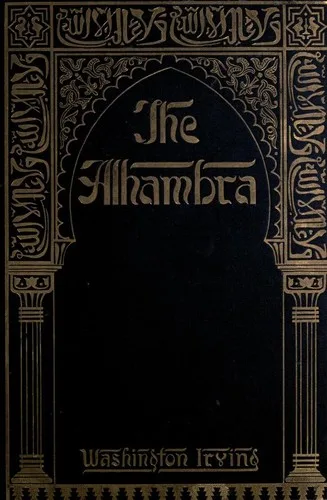
Part travelogue and part folklore collection, this work documents Washington Irving’s 1829 residency within the derelict Moorish palace in Granada. He provides detailed architectural observations of the Court of Lions and the Hall of Ambassadors while tracing the decline of the Nasrid dynasty. The text weaves together historical accounts of the 1492 Reconquista with local supernatural legends involving hidden treasures, enchanted soldiers, and astrological omens. Irving categorizes the various inhabitants of the ruins, from the humble "Sons of the Alhambra" to the ghosts of the dispossessed royalty.
Architectural historians and students of Romantic literature read this book to understand the nineteenth-century Western fascination with Al-Andalus. It serves as a bridge between factual topography and myth-making, preserving Spanish cultural traditions that were fading at the time of writing. A reader finishs the text with a clear visualization of Islamic decorative motifs and a deeper knowledge of how medieval Moorish history differs from the later Christian narratives imposed upon the region.
- Published
- 1800
- Language
- EN
![The United States in Literature [with three long stories] -- Seventh Edition](https://kwbjoqloympvbpzbrfja.supabase.co/storage/v1/object/public/scan-images/catalog/f48162c6-7eb5-41ec-933b-9c4218489c7d-full.webp)