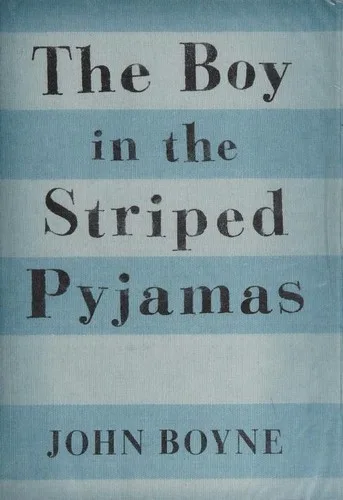
The Boy in the Striped Pajamas
Nine-year-old Bruno moves from Berlin to a house located next to the Auschwitz concentration camp after his father is promoted to Commandant. Distant from his previous life, Bruno discovers a high wire fence and meets Shmuel, a Jewish boy living on the other side. Clad in striped uniforms that Bruno mistakes for pajamas, Shmuel shares his daily reality of hunger and confinement. The boys develop a secret friendship, eventually leading Bruno to crawl under the fence to help his friend find his missing father.
Readers of historical fiction choose this book to witness the Holocaust through the lens of childhood innocence. The narrative contrasts a protected upbringing with the cruelty of the Final Solution. It serves as an entry point for young adults learning about institutionalized prejudice and the human capacity for indifference. The audience walks away with a stark understanding of how ideology blinds individuals to the suffering of others and the tragic consequences of unchecked hatred on the most vulnerable.
Inward-looking, contemplative, clear-cut and thought-provoking; an easy read.
Best for readers like The Empathetic Explorer. Which reader are you?
Insights from The Boy in the Striped Pajamas
“It was a very unusual thing to see.”
Bruno looking through his window and seeing people in pajamas shows how kids try to find logic in horror. He thinks it is a game because his world has always been safe.
“We're like twins.”
Shmuel and Bruno having the same birthday makes their different lives feel like a cruel coin flip. One boy gets a warm house while the other gets a fence.
Pavel was a doctor but ended up peeling potatoes in a kitchen. It shows how quickly a person's entire identity can be erased by hate.
Gretel trading her dolls for maps of Europe shows how innocence can be replaced by propaganda. She grew up too fast in the wrong direction.
- Published
- 2006
- Language
- EN