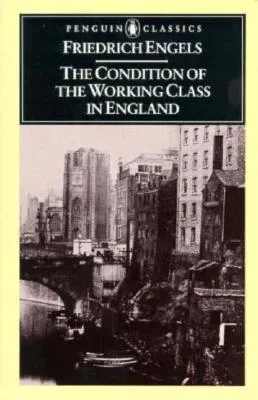
Based on Friedrich Engels’ firsthand observations in Manchester, this text analyzes the physical and social misery produced by the Industrial Revolution. It describes the precise mechanics of "social murder," where the competitive capitalist system forces laborers into overcrowded slums, poor sanitation, and hazardous factory roles. Engels documents how the introduction of machinery displaced skilled workers, reduced wages, and concentrated wealth among the industrial bourgeoisie. He argues that these material conditions inevitably fuel class antagonism and lead to the formation of trade unions and organized political movements.
Historians and political theorists study this work to understand the origins of scientific socialism and the early sociology of urban poverty. It provides a detailed primary account of nineteenth-century living standards and the structural evolution of the British proletariat. Readers gain an empirical framework for connecting economic production to social outcomes. The book serves as a foundational source for analyzing the relationship between capitalist expansion and the systematic degradation of the laboring population, offering a concrete model for modern structural criticism.
- Published
- 1844
- Language
- EN