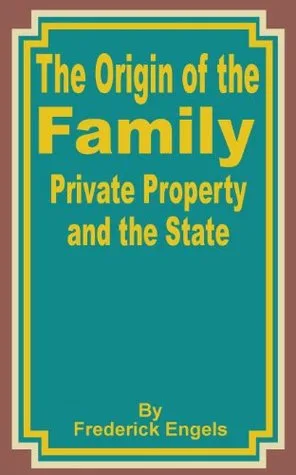
The Origin of the Family, Private Property and the State
Friedrich Engels utilizes Lewis Henry Morgan's anthropological research to trace the evolution of human social organization from kinship-based groups to class-based societies. He argues that the shift from communal property to private ownership caused the transition from matrilineal descent to the patriarchal nuclear family. This structural change facilitated the accumulation of wealth and necessitated the creation of the state as a specialized apparatus of force to manage class conflict and protect property rights. The text analyzes how the subjugation of women became a requirement for securing inheritance through male lineages.
Students of political theory and historical materialism read this work to understand the economic origins of social institutions. It provides a framework for analyzing how domestic life and governance change alongside modes of production. Readers gain a perspective on the state not as a neutral mediator, but as a historical development tied to economic inequality. The book serves those researching the intersection of early feminism and socialist thought, offering shorthand explanations for why certain legal and social hierarchies emerged during the move toward civilization.
Deep, outward-looking and clear-cut; a demanding read.
Best for readers like The Evidence Seeker. Which reader are you?
- Published
- 1884
- Language
- EN