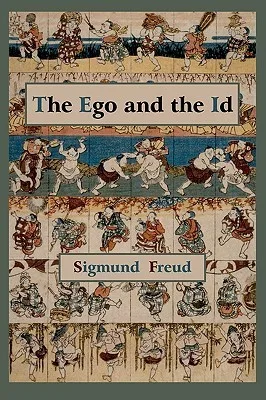
In this 1923 theoretical work, Sigmund Freud maps the human psyche into three distinct structural components: the id, the ego, and the super-ego. He argues that the id houses primal, unconscious drives and the pleasure principle, while the ego serves as the rational mediator dealing with external reality. The super-ego emerges as an internal authority figure, representing societal morals and parental inhibitions. Freud details how the tension between these forces produces anxiety and shapes human personality through the regulation of libido.
Students of psychology and history read this text to understand the foundations of psychoanalytic theory and the mechanics of internal conflict. It provides a framework for analyzing how individual guilt and social norms influence decision-making. Readers gain a technical vocabulary for discussing the unconscious mind and a specific model for interpreting behavioral patterns through the lens of developmental stages. The book functions as a primary source for those examining the transition from topographical to structural models of the mind.
Deep and inward-looking; a demanding read.
Best for readers like The Wisdom Collector. Which reader are you?
- Published
- 1923
- Language
- EN