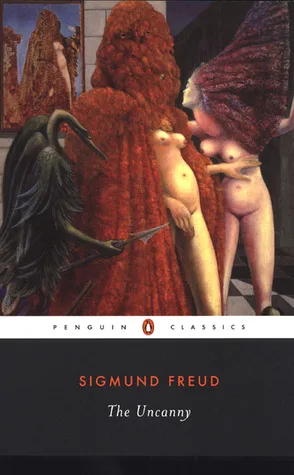
Freud identifies the uncanny, or "unheimlich," as a specific cognitive dissonance where the familiar suddenly feels alienated and threatening. He traces the etymology of the German word to demonstrate how the concept of the "homely" transitions into its opposite, the "hidden." Relying on E.T.A. Hoffmann’s story The Sandman, Freud rejects the theory that the uncanny stems from intellectual uncertainty. Instead, he argues it arises from repressed infantile complexes—specifically the castration anxiety symbolized by eye injury—or from primitive beliefs, like the double or the return of the dead, that the modern ego has supposedly surpassed.
This essay attracts students of aesthetics, literary theorists, and horror enthusiasts who want to understand why specific images provoke dread. Readers learn to distinguish between general fear and the psychological "return of the repressed." By applying these psychoanalytic frameworks, a reader gains a vocabulary to analyze how film and fiction manipulate the boundary between the living and the inanimate. The text provides a technical basis for evaluating why dolls, doubles, and mechanical repetitions trigger a distinct sense of unease.
- Published
- 1919
- Language
- EN