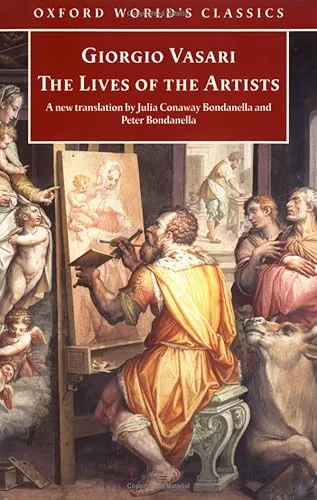
Giorgio Vasari’s seminal text traces the progression of Italian art from its medieval decline to its sixteenth-century peak. He structures the history of painting, sculpture, and architecture through a three-stage biological framework, beginning with the initial rebirth seen in Giotto’s naturalism and culminating in the technical perfection of Michelangelo. The book provides detailed biographical accounts of figures such as Leonardo da Vinci and Raphael, documenting their apprenticeships, public rivalries, and specific technical innovations in perspective, anatomy, and the use of light.
Art historians and students of the Renaissance read this work to understand the origins of art criticism and the shift toward recognizing the artist as an individual intellectual. Readers gain a foundational map of the Florentine and Roman schools, alongside firsthand anecdotes about the personal temperaments and working methods of master craftsmen. The text provides the primary vocabulary used to categorize the transition from the Gothic style to the High Renaissance, leaving the reader with a chronological understanding of how classical aesthetics were rediscovered.
Outward-looking; a moderate read.
Best for readers like The Evidence Seeker. Which reader are you?
- Published
- 1550
- Language
- EN