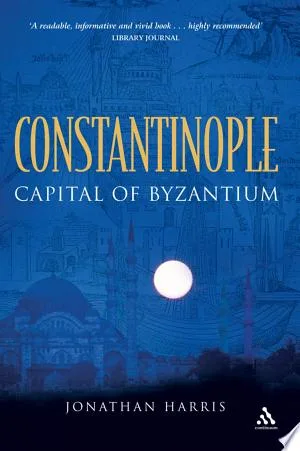
Jonathan Harris reconstructs the urban landscape and political culture of Constantinople during the peak of its influence around the year 1200. The book details how the Byzantine identity relied upon a fusion of Orthodox Christian spirituality and imperial bureaucracy. Harris examines specific landmarks, such as the Hagia Sophia and the Great Palace, to demonstrate how the physical layout of the city projected divine authority. He tracks the daily rituals of the emperors and the massive collection of holy relics that established the capital as a New Jerusalem, ultimately illustrating why the city remained a target for both Crusader and Ottoman ambition.
Students and historians of the medieval Mediterranean read this text to understand the internal logic of the late Byzantine state. The reader gains a clear perspective on how the inhabitants of Constantinople perceived their position in the world and how their liturgical traditions dictated political survival. By providing a map of the city’s social and religious topography, Harris enables the reader to visualize the capital before its medieval decline and eventual conquest.
Outward-looking; a moderate read.
Best for readers like The Evidence Seeker. Which reader are you?
- Published
- 2009
- Publisher
- A&C Black
- ISBN
- 9780826430861
- Language
- EN