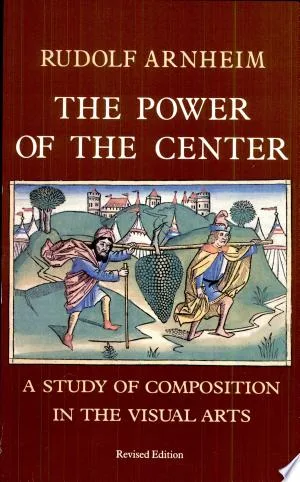
Rudolf Arnheim analyzes the structural mechanics of visual art through the interaction of two spatial systems: the concentric and the Cartesian. The concentric system operates around a focal nucleus, drawing the eye toward a central point of gravity, while the Cartesian system utilizes a grid-based framework of horizontal and vertical coordinates. Arnheim demonstrates how artists balance these opposing forces to create stability or tension within various mediums. He applies these geometric principles to the placement of figures in Renaissance paintings, the distribution of weight in classical sculpture, and the organizational layout of architectural floor plans.
Art historians, architects, and studio artists read this work to move beyond intuitive choices toward a technical understanding of compositional balance. The text provides a rigorous vocabulary for identifying how spatial centers influence a viewer’s perception of distance and importance. Readers learn to diagnose why certain arrangements feel harmonious or disjointed by evaluating the vector forces at play on a canvas or within a building. By internalizing these formal frameworks, a practitioner gains the ability to manipulate structural centers to direct attention and manage the psychological weight of a visual field.
Deep and outward-looking; a demanding read.
Best for readers like The Deep Diver. Which reader are you?
- Published
- 1983
- Publisher
- Univ of California Press
- ISBN
- 9780520050150
- Language
- EN