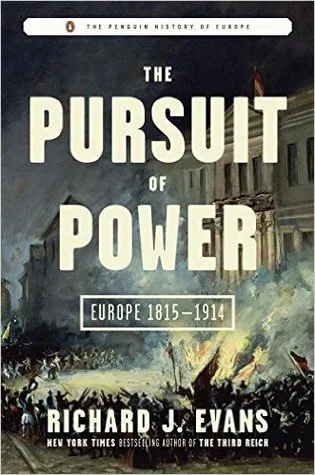
Richard J. Evans traces the century from the fall of Napoleon to the outbreak of World War I, framing Europe as a continent obsessed with the acquisition and management of power. He examines how control shifted from hereditary monarchs and land-owning aristocrats to new industrial capitalists and organized labor movements. The narrative tracks the transition from rural serfdom to urban manufacturing, highlighting the technological advances in weaponry and medicine that allowed European nations to dominate global territories. Evans analyzes how state bureaucracies centralized authority, while the rise of nationalist and feminist movements challenged existing hierarchies.
This book provides a foundational overview for students of modern history and readers interested in the nineteenth-century origins of the modern state. By connecting economic shifts to political revolutions, it clarifies how Europe moved from a collection of empires into a network of competing nation-states. Readers gain a clear understanding of the social tensions and diplomatic failures that preceded the 1914 collapse into total war. The text serves as a detailed map of how modernization reshaped both the physical landscape and the legal status of European citizens.
- Published
- 2016
- Language
- EN