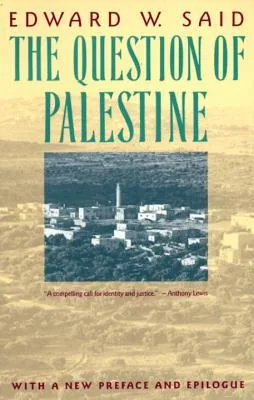
Edward Said analyzes the emergence of modern Palestinian national identity and its collision with the Zionist movement. He traces how Western colonial attitudes facilitated the displacement of the native population, arguing that Zionism succeeded by presenting Palestine as an empty land to the European public while rendering its inhabitants politically invisible. Said uses historical documents and political analysis to document the systematic erasure of Palestinian history and the subsequent development of the Palestine Liberation Organization as a response to exile. He emphasizes the human dimension of the struggle, framing it as a conflict over land, memory, and the right to self-determination.
Political scientists, historians, and students of Middle Eastern studies read this book to understand the ideological roots of the Arab-Israeli conflict. It provides a framework for analyzing how imperial rhetoric shapes international policy and public perception. Readers gain a detailed perspective on the historical grievances of the Palestinian people and the specific political structures that maintain their statelessness. The text offers a counter-narrative to traditional Western historiography, providing a foundation for studying the intersection of culture, power, and territorial sovereignty in the twentieth century.
- Published
- 1979
- Language
- EN
More by Edward W. Said
See all →
Readers also enjoyed