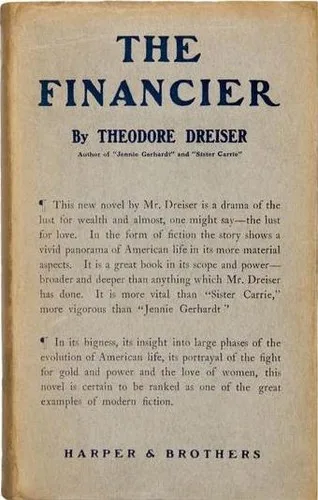
Frank Cowperwood, a financier recently released from prison, moves to Chicago after the Panic of 1873 to rebuild his fortune. He targets the city’s fragmented gas and street railway systems, utilizing aggressive stock manipulation, political bribery, and strategic monopolies to gain control of public utilities. The narrative details his persistent lobbying of the city council and his conflicts with inherited wealth. Alongside his professional maneuvers, Cowperwood navigates complex social hierarchies and high-stakes infidelity, illustrating the intersection of corporate consolidation and personal reputation in the Gilded Age.
Business historians and students of industrial history read this work to observe the mechanics of nineteenth-century American capitalism. It provides a technical look at how private interests subvert local government and municipal legislation for financial gain. Readers walk away with a specific understanding of how urban infrastructure was financed and the methods used to consolidate market power before modern regulatory frameworks existed. It serves as a case study in the tactical aggression required to monopolize essential services within a rapidly expanding metropolitan economy.
Outward-looking and thought-provoking; a moderate read.
Best for readers like The Systems Thinker. Which reader are you?
- Published
- 1914
- Language
- EN