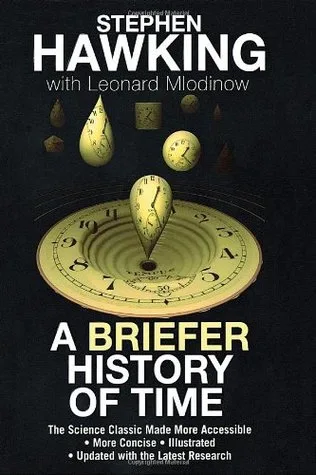
Stephen Hawking provides a technical overview of theoretical physics, focusing on the quest for a Unified Field Theory that bridges general relativity and quantum mechanics. He explains the geometry of spacetime through the lens of superstring theory and M-theory, which propose that the universe consists of eleven dimensions. The text details the mechanics of black holes, the concept of imaginary time, and the holographic principle, which suggests the three-dimensional world remains encoded on a two-dimensional boundary. Hawking uses these frameworks to address the origin of the cosmos and the possibility of multiple histories.
Students and science enthusiasts read this volume to understand how gravity and particle physics interact at a fundamental level. It serves as a visual guide for the curious mind, translating complex mathematical equations into geometric shapes and mental models. Readers finish the book with a factual baseline for modern cosmology, gaining a working knowledge of how p-branes and gravitational waves shape the structure of existence. It provides the clarity needed to grasp how the macro and micro scales of reality function as a single system.
Deep and outward-looking; a moderate read.
Best for readers like The Systems Thinker. Which reader are you?
- Published
- 2001
- Language
- EN
More by Stephen W. Hawking
See all →


Books like The Universe in a Nutshell
See all 12 →