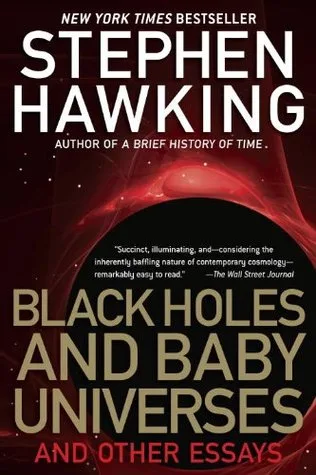
This collection of thirteen essays and an interview tracks the evolution of Stephen Hawking’s scientific theories and his personal history. Hawking discusses the mechanics of black holes, focusing specifically on his discovery that they emit thermal radiation, now known as Hawking radiation. He examines the imaginary time proposal for the origins of the universe, which suggests that space-time is finite but lacks a distinct boundary or edge. The text also explains his vision of baby universes—tiny regions of space that branch off from our own through wormholes—and their role in quantum gravity.
Physicists and science enthusiasts read this book to understand the intersection of general relativity and quantum mechanics from an expert perspective. It serves those interested in the logic behind cosmological models rather than just the mathematical equations. A reader finishes these essays with a clearer grasp of the information paradox and the thermodynamic properties of collapsed stars. The inclusion of autobiographical sketches provides a direct account of how a theoretical physicist approaches large-scale problems while living with a progressive motor neuron disease.
Outward-looking; a moderate read.
Best for readers like The Evidence Seeker. Which reader are you?
- Published
- 1993
- Language
- EN