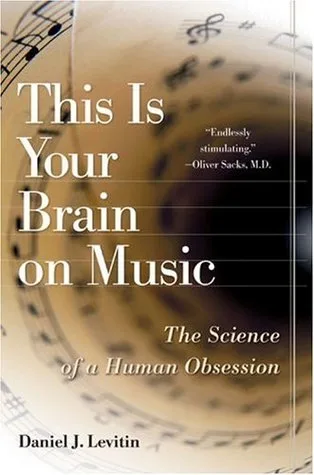
The World in Six Songs: How the Musical Brain Created Human Nature
Daniel J. Levitin argues that six specific categories of song—friendship, joy, comfort, knowledge, religion, and love—shaped the evolution of human culture and neural architecture. He combines neurobiology with evolutionary psychology to show how rhythmic synchronization and melodic memory enabled early humans to cooperate, preserve oral histories, and establish social hierarchies. The text examines how neurochemicals like oxytocin and dopamine are triggered by shared musical experiences, reinforcing tribal bonds and providing a survival advantage that predates the development of complex language.
Musicians, historians, and social scientists read this book to understand the biological foundations of artistic expression. It appeals to those interested in the bridge between the humanities and hard science. Readers walk away with a framework for identifying how specific musical structures influence collective behavior and personal emotion. By connecting ancestral survival strategies to modern cognitive science, the book provides a technical explanation for why humans are uniquely wired to create and respond to organized sound.
- Published
- 2008
- Language
- EN