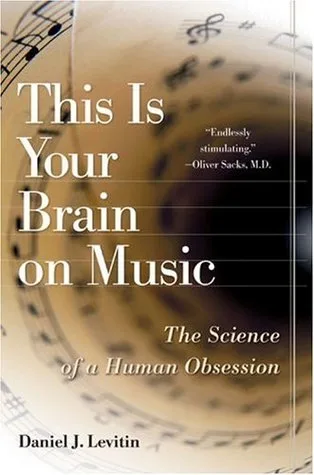
This Is Your Brain on Music
Daniel J. Levitin examines the neurobiology of auditory perception and the evolutionary origins of human musicality. Drawing on his experience as a studio producer and cognitive psychologist, he explains how the brain processes pitch, rhythm, tempo, and timbre across distinct regions. The text describes how the cerebellum tracks beat, how the amygdala attaches emotional significance to harmony, and how the brain’s reward centers release dopamine in response to familiar melodic patterns. Detailed accounts of musical "earworms" and the mathematics of intervals illustrate how the mind categorizes sound into meaningful artistic structures.
This book serves musicians, neuroscientists, and listeners interested in the mechanics of their own aesthetic preferences. Readers learn why certain chord progressions trigger nostalgia and how early childhood exposure shapes permanent musical taste. After reading, one understands the physiological reasons behind physical reactions to music, such as tapping a foot or feeling chills. The book provides a technical framework for understanding why the human species is biologically programmed to create and consume organized sound.
- Published
- 2006
- Language
- EN
More by Daniel J. Levitin
See all →