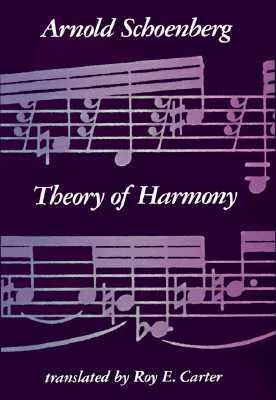
Arnold Schoenberg presents a technical manual on common practice harmony while simultaneously questioning the rigidity of classical rules. He analyzes the construction of major and minor scales, the progression of root movements, and the use of seventh chords and modulation. The text introduces the concept of structural tonality not as a fixed physical law, but as a historical stage in artistic evolution. Schoenberg specifically details the emergence of vagrant chords and dissonances, arguing that the distinction between consonance and dissonance is merely one of degree rather than kind.
This book serves composers, theorists, and advanced students who seek to understand the internal logic of the tonal system before shifting toward more complex harmonic languages. Readers gain a detailed methodology for part-writing and a philosophical framework for seeing musical history as a continuous progression toward increased tonal freedom. By studying these chapters, a musician acquires the technical proficiency needed to command traditional forms and the conceptual tools to move beyond them.
- Published
- 1911
- Language
- EN