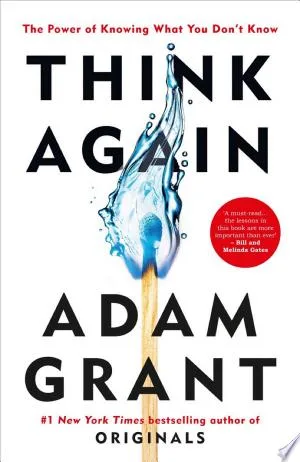
Adam Grant argues that mental flexibility is a distinct skill set involving the constant unlearning of outdated convictions. He identifies three common mindsets that hinder progress: the preacher defending an ideal, the prosecutor proving others wrong, and the politician seeking approval. To counter these, he introduces the scientist mindset, which prioritizes data and discovery over being right. Grant shares accounts of experts, such as forest firefighters and business leaders, who either succeeded or failed based on their willingness to doubt their initial instincts when faced with new evidence.
This book serves professionals, leaders, and students who operate in rapidly shifting environments. Readers look for methods to improve collective decision-making and reduce organizational friction. The text provides a framework for holding opinions weakly and engaging in productive disagreements. By the final chapter, a reader gains a toolkit for recognizing cognitive blind spots and building a culture that values curiosity and the correction of errors over the preservation of ego or tradition.
Insights from Think Again
“A debate is not a war. It's a dance.”
Arguments aren't like war. They should be like a dance. If you don't move with the other person, everyone falls over.
“If knowledge is power, knowing what we don't know is wisdom.”
I used to think changing my mind was a sign of weakness. Now I see it as a sign of growth. It means I'm not stuck in the past.
“Arrogance is ignorance plus conviction.”
Confidence is a trap. You need to be okay with saying you don't know the answer. It makes people trust you more.
“The more you value your own intelligence, the more likely you are to fall victim to your own biases.”
The smartest people I know are actually the most dangerous. Their brains are just better at making excuses for staying wrong.
- Published
- 2021
- Publisher
- Random House
- ISBN
- 9780753553909
- Language
- EN