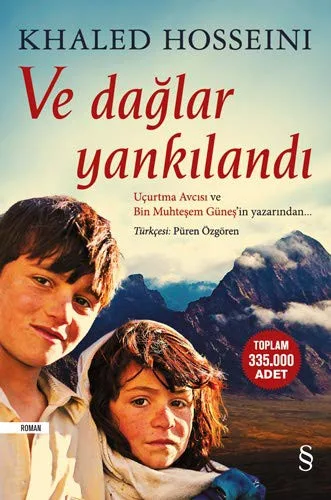
The narrative begins in a small Afghan village where a father tells his children a myth about a giant stealing a beloved son, a story that foreshadows a forced separation. Ten-year-old Abdullah remains deeply attached to his sister Pari, but their family's poverty leads to Pari being sold to a wealthy couple in Kabul. The timeline spans decades and continents, following the siblings’ diverging lives from the 1950s through the 2000s. The plot documents how this initial fracture affects cousins, caretakers, and neighbors in Paris, San Francisco, and Greece, illustrating the long-term impact of individual choices on an extended family tree.
This book serves readers interested in the mechanics of human memory and the specific history of the Afghan diaspora. It attracts people who want to understand how trauma from displacement and sibling loss persists across several generations. Readers walk away with a detailed view of how economic desperation shapes moral decisions and a factual sense of the cultural shifts in Afghanistan over the last half-century. It functions as a study of how people attempt to reconstruct their identities after losing their primary familial roots.
Inward-looking and contemplative; an easy read.
Best for readers like The Empathetic Explorer. Which reader are you?
- Published
- 2014
- Language
- EN