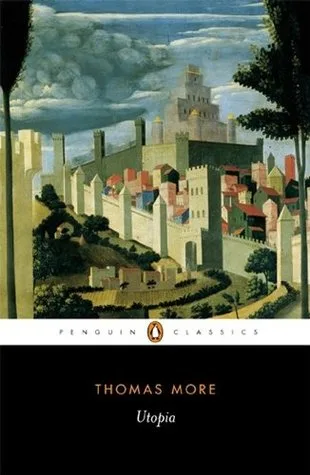
Thomas More’s text presents a formal dialogue between the narrator and a traveler named Raphael Hythloday, who describes the inner workings of a remote island nation. The work contrasts the political corruption and private property systems of sixteenth-century Europe with a fictional society built on communal ownership, mandatory labor, and religious tolerance. In this territory, citizens wear identical clothing, follow strict schedules, and use gold for chamber pots to devalue it. The argument focuses on whether a perfect social structure can eliminate human greed through the abolition of money and the implementation of planned urban living.
Legislators and students of political theory read this book to analyze the origins of socialist thought and the ethics of statecraft. It functions as a blueprint for institutional engineering, forcing the reader to evaluate if human behavior can be reshaped by law and physical environment. Those who finish the text gain a historical perspective on the tension between individual liberty and collective stability. It provides a framework for identifying how specific social policies impact community health and the distribution of resources.
Deep and open-ended; a moderate read.
Best for readers like The Deep Diver. Which reader are you?
- Published
- 1516
- Language
- EN