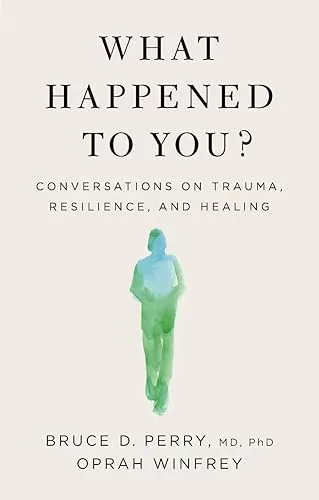
What Happened To You?: Conversations on Trauma, Resilience, and Healing
In this collaboration, Bruce D. Perry and Oprah Winfrey argue that behavioral problems and mental health struggles are often physiological adaptations to past adversity. Utilizing the Neurosequential Model, Perry explains how the brain develops from the bottom up, meaning that early life disruptions to the brainstem and limbic system dictate later executive functioning. The text shifts the traditional diagnostic inquiry from asking what is wrong with an individual to investigating what specific events happened to them. They clarify how the body’s stress response systems become sensitized or resilient based on the consistency of caregiving and environmental safety during developmental windows.
This book serves educators, social workers, and parents who navigate the long-term effects of childhood stress. Readers learn to identify the neurobiological roots of emotional dysregulation and the necessity of rhythmic regulation for healing. By the end, the reader understands how social connectivity acts as a biological buffer against stress. They gain a practical vocabulary for discussing developmental trauma and a framework for building environments that prioritize physical and emotional safety as the primary mechanism for behavioral change and neural reorganization.
Insights from What Happened To You?: Conversations on Trauma, Resilience, and Healing
“The brain is an historical organ.”
The brain remembers things your conscious mind forgot. A specific smell or sound can trigger an old fear.
“You have to regulate before you can reason.”
Physical movement helps heal the mind. Walking or drumming can regulate a person when words fail.
Trauma changes how you see the world's neutral faces. A blank expression can look like a threat.
Neglect can be just as damaging as active abuse. The lack of positive input starves the developing brain.
- Published
- 2021
- Language
- EN