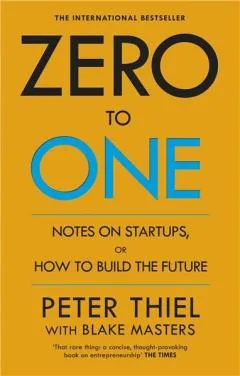
Zero to One: Notes on Start Ups, or How to Build the Future
Peter Thiel argues that progress takes two forms: horizontal expansion and vertical creation. While most businesses focus on moving from one to n by copying existing models, true innovation happens when a company goes from zero to one. This transition requires building a creative monopoly rather than competing in a crowded marketplace. The text outlines specific frameworks for achieving this, including the importance of proprietary technology that is ten times better than alternatives, the network effects of a growing user base, and the advantages of economies of scale. It challenges the conventional view that competition is healthy, suggesting instead that lasting value is found in owning a unique niche.
Founders and engineers read this book to understand the structural requirements of a successful startup. It provides a blueprint for identifying secrets that others have overlooked and explains how to build a team around a singular vision. Readers walk away with a methodology for evaluating market durability and a set of questions to test the viability of a new business. The material serves as a guide for anyone aiming to create the next generation of original services and products.
Insights from Zero to One: Notes on Start Ups, or How to Build the Future
“All happy companies are different: each one earns a monopoly by solving a unique problem.”
Competition is for losers. If you build something slightly better than the next guy, you both die. Go for a monopoly or don't bother.
“The best startups might be considered slightly less extreme forms of cults.”
Prophets and cult leaders make the best founders. You need people who are fanatically obsessed with one specific vision of the future. Normal people build boring things.
“Doing what we already know how to do takes the world from 1 to n, adding more of something familiar.”
Copying a model takes the world from 1 to n. Doing something new takes us from 0 to 1. Vertical progress is the only way to actually win.
“Customers will not come just because you build it. You have to make it happen.”
Sales matters just as much as the product. Even if your tech is amazing, it won't sell itself. Engineers who ignore distribution always fail.
- Published
- 2014
- Publisher
- Virgin Digital
- ISBN
- 9781619610200
- Language
- EN